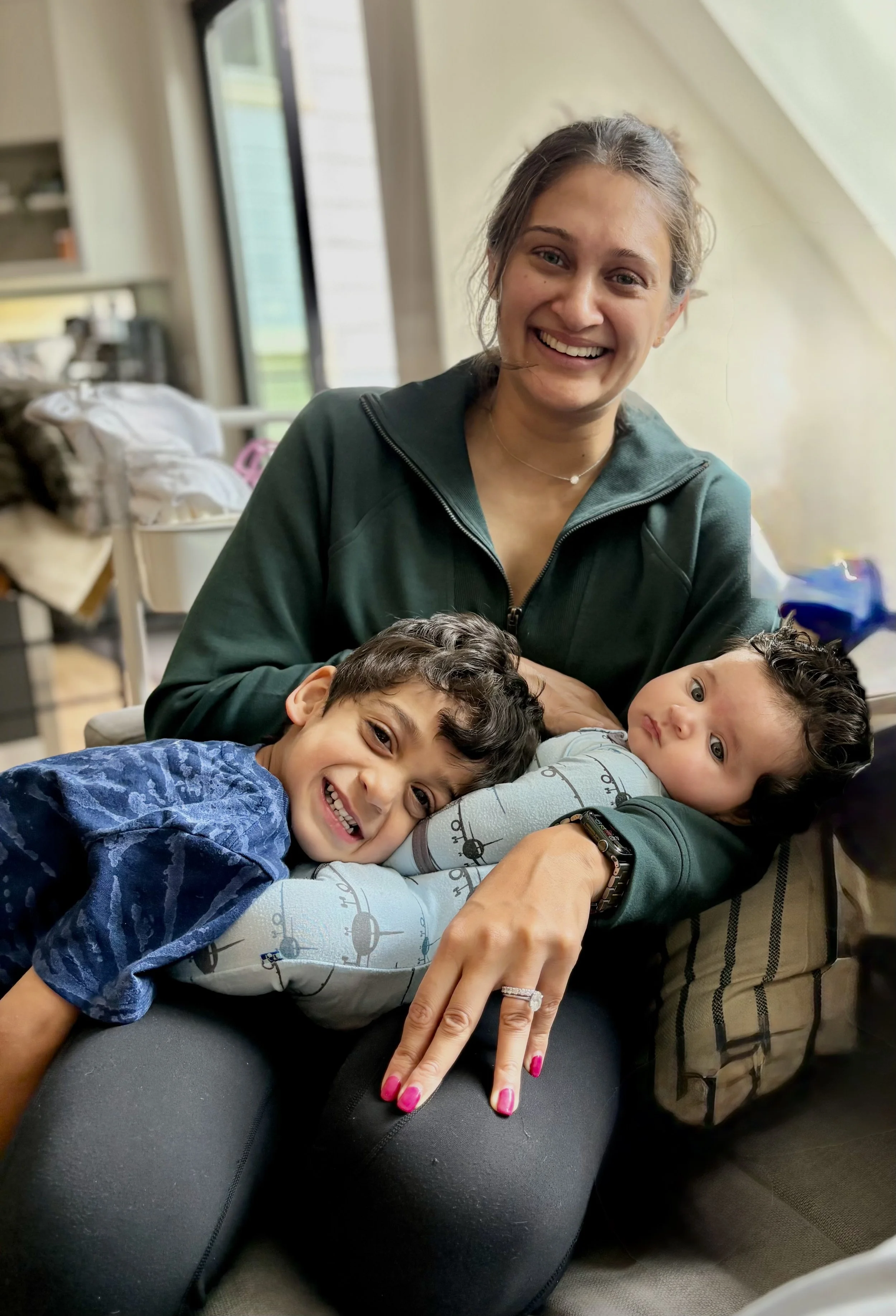
My Two Babies Slept Really Well -- Just Not The Same Way

And That’s Exactly What I Expected
As a sleep psychologist—and now a mom of two—people often assume my babies must have slept exactly the same. The truth? Both slept beautifully. Both slept through the night early. But their timelines—and what helped them get there—looked very different.
And honestly?
That’s exactly what I expected.
One of the biggest misconceptions I see in the baby sleep world is the idea that if parents “do everything right,” babies should all sleep the same way, on the same timeline, using the same tools.
That’s simply not how infant sleep works.
Babies are human beings—not robots.
They come with different temperaments, feeding styles, sensory preferences, nervous systems, and developmental timelines.
And my two children reminded me of that from the very beginning.
What’s important, though, is this:
Both of my babies slept really well.
Both developed predictable, healthy sleep early on.
Both gave us nights that were extremely manageable, restorative, and honestly… pretty joyful.
The path just didn’t look identical.
And that’s exactly the point.
My daughter: early, efficient, and ready
My daughter began sleeping (or relaxing) 12 hours in her crib—without a dream feed—as early as 5 weeks old.
Was I surprised?
Honestly… a little.
But when I stepped back, it made perfect sense.
She was an incredibly efficient feeder from early on. She was able to take in strong, full feeds during the day, which meant she was getting enough of her calories during daylight hours earlier than many babies do.
That matters.
When babies are able to take in the majority of their calories during the day, nighttime feeding needs can naturally begin to decrease (assuming growth, feeding, and pediatric guidance all support that).
She also had very clear self-soothing preferences.
She wanted nothing to do with a pacifier.
Instead, she found her fingers early—and sometimes even soothed by gently tugging her hair.
That became her way of settling.
And it worked beautifully for her.
My son: steady, slower, and different
My son got there too—but on a different timeline.
He needed more time to comfortably take bigger feeds at once.
So we kept his dream feed longer, because that made sense for him.
He started sleeping through the night closer to 10–12 weeks.
Was that a problem?
Not even a little.
He was still sleeping beautifully. Still predictable. Still developing strong sleep habits.
He just needed a slightly different feeding rhythm before his body was ready to drop that overnight feed.
He also loved his pacifier.
And in his case, it genuinely helped support settling and self-soothing.
Did that make him “dependent”?
No.
It made him… him.
So what stayed the same?
This is the part I really want parents to understand:
The babies were different.
The principles were not.
With both babies, I focused on:
Full, quality feeds during the day when developmentally appropriate
Consistent daytime light exposure to help support their developing circadian rhythm
Learning their sleepy cues without becoming overly rigid
Giving them opportunities to practice settling in ways that fit their temperament
Creating predictability without expecting perfection
Staying calm and consistent when sleep naturally shifted (because it always does)
The “how” looked different, but the foundation didn’t.
And both babies still developed strong, predictable sleep.
What I want parents to take away
If your friend’s baby sleeps through at 5 or 6 weeks… and yours doesn’t…
That does not automatically mean:
you’re doing something wrong
your baby is “bad at sleep”
you missed some magic window
you need a stricter schedule
you need to copy someone else’s baby
Sometimes babies feed differently.
Sometimes they soothe differently.
Sometimes their nervous systems are wired differently.
Sometimes they simply need a little more time.
And sometimes… they still sleep beautifully while taking a different path.
Healthy, predictable sleep is absolutely possible.
Not because babies are robots.
Not because parents do everything perfectly.
But because when you understand feeding, development, temperament, and sleep science, you can apply the same principles to the baby in front of you.
Same science.
Different babies.
Still great sleep.
------
If you’re looking for practical, evidence-based guidance to help your baby sleep well—without rigid schedules, guilt, or generic advice—I’d love to help.
Explore my newborn support options, individual consultations, and parent education resources here.